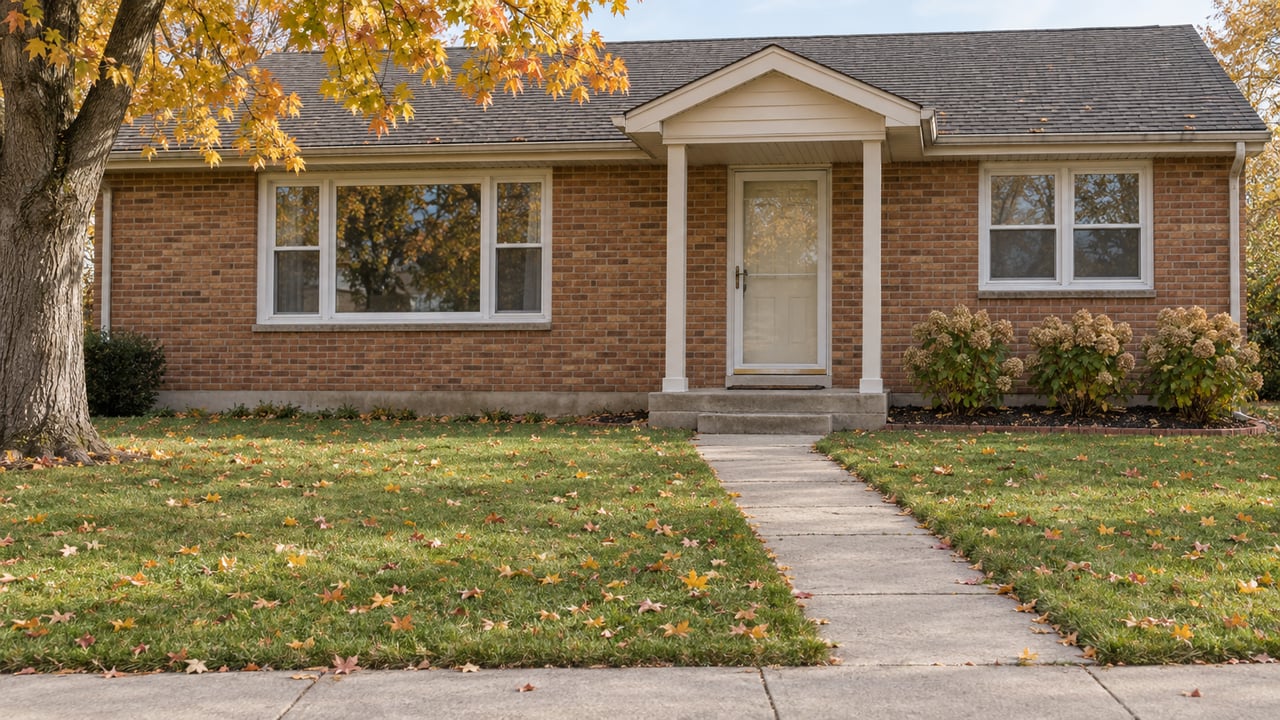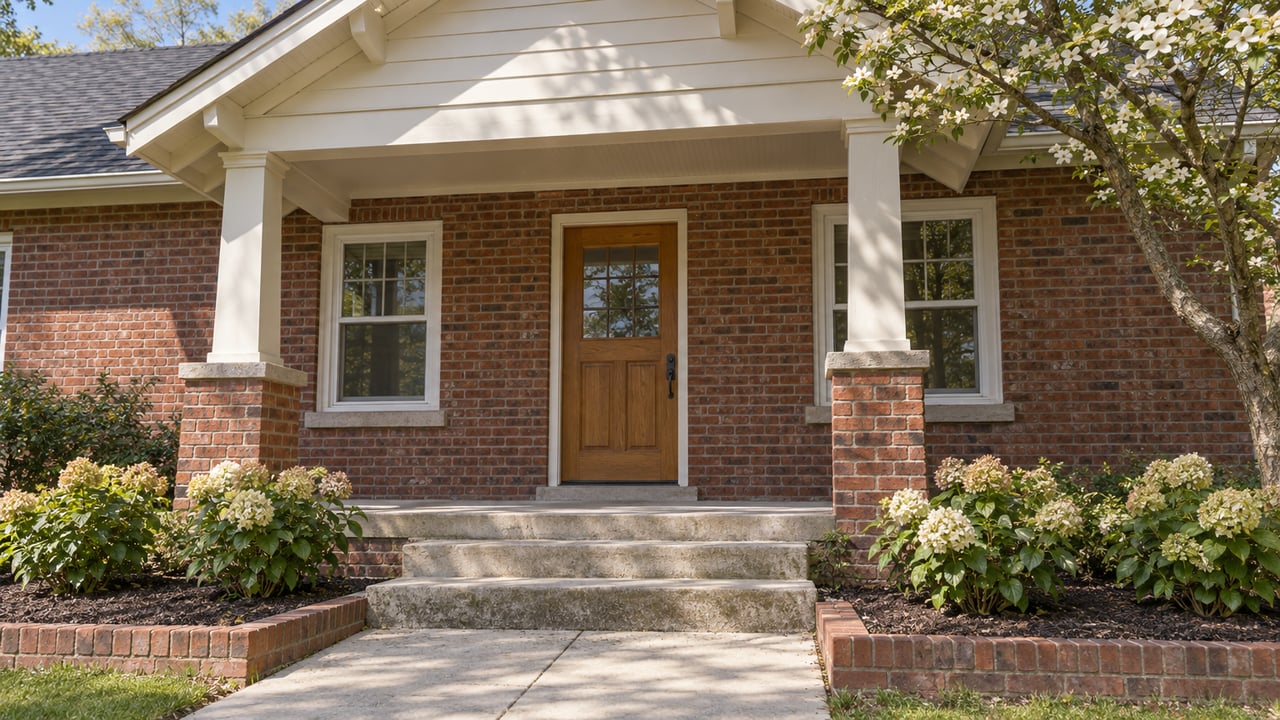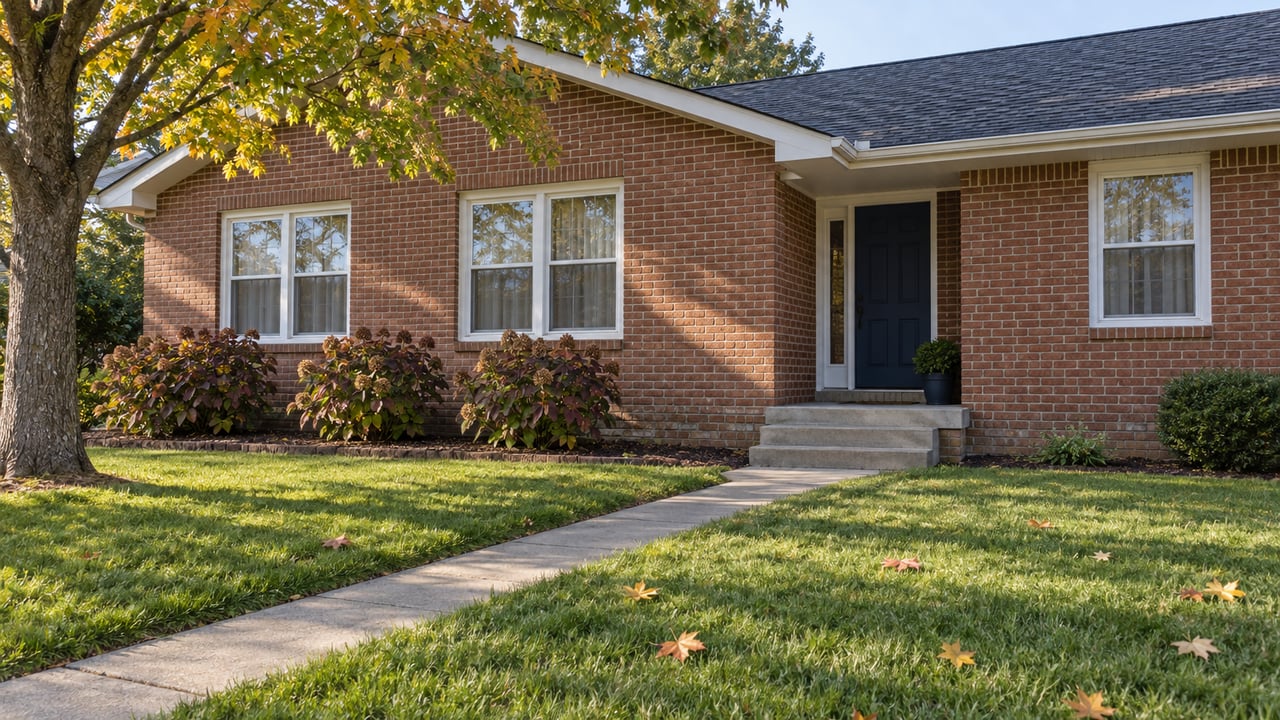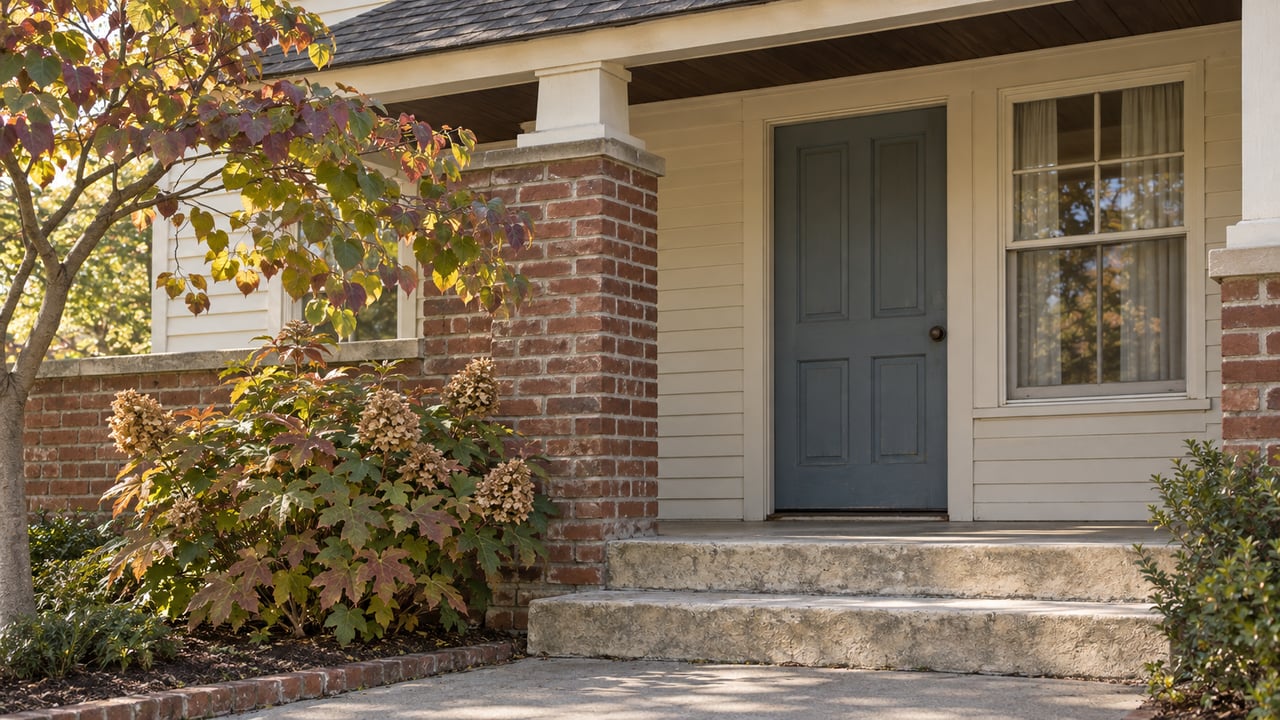
Sometime this year, a development company closed on an 1860s house in Alton's Middletown Historic District and applied for a permit to tear it down. The plan, according to the Alton Area Landmarks Association, is to put up something new designed to look old on the same lot. The Landmarks Association pushed back hard, arguing that a house built last year to resemble 1890 is not a substitute for the real thing, no matter how convincing the trim work looks.
That single permit application is a small story. But it sits on top of a much bigger one, and if you're comparing Alton against other Metro East communities right now, the bigger story matters more than any headline number you'll find on a home search site.
Here it is. Over the three months ending May 2026, the median sale price for a home in Alton was $120,000, down 5.8 percent from the same stretch the year before. In that same window, the price per square foot climbed to $103, up 6.2 percent year over year. Homes are also taking longer to sell, averaging 41 days on market compared to 36 days the year prior.
Read only the median, and Alton looks like a market getting softer. Read only the price per square foot, and it looks like a market getting stronger. Both are true at once, and the reason has everything to do with the kind of house that's changing hands.
Two numbers, one housing stock
| Metric | Three months ending May 2026 | Change from prior year |
|---|---|---|
| Median sale price | $120,000 | Down 5.8% |
| Price per square foot | $103 | Up 6.2% |
| Average days on market | 41 days | Up from 36 days |
A falling median next to a rising price per square foot is what shows up when the mix of homes selling changes, not when the value of any individual home changes. Picture two different houses. One is a well-kept, updated three-bedroom that sells quickly and at a strong price for its size. The other is a larger, older house that needs a new roof, updated wiring, or a rebuilt kitchen, and it sells for less overall because a buyer has to budget for that work. If more of the second kind of house sells in a given quarter, the median drops even though the finished, move-in-ready homes are commanding more money per square foot than they were a year ago.
That's a plausible read of Alton right now, and it lines up with what the city's housing stock actually looks like.
What's actually for sale in Alton
Alton has three neighborhoods listed on the National Register of Historic Places: Middletown, Christian Hill, and Upper Alton. Middletown alone includes 653 buildings, 613 of them counted as historically contributing, with roots going back to the original 1817 plat of the city. It was added to the National Register in 1978, expanded in 1982 to take in the Pagan Hill neighborhood, and expanded again in a project completed in 2022 that folded in 134 more properties along Third Street, Broadway, and Front Street downtown.
That's a lot of pre-1930s housing stock concentrated in one small city, and it comes in every condition imaginable. Some of it has been carefully restored, with original hardwood floors, wood windows, and the kind of ornamental detail that architects like Theodore Link and Henry Richardson designed into Alton's wealthier homes at the turn of the twentieth century. Some of it has sat with deferred maintenance for years and needs real investment before it's livable. Recent listing data shows Middletown and Christian Hill coming up again and again as the neighborhoods where Alton sales are concentrated, and that mix of restored and unrestored spans both.
The Landmarks Association has been blunt about what erodes a historic home's value over time. In its own words, three trends threaten the integrity of these districts:
- Replacing original wood windows with plastic or metal
- Using plastic siding over original materials
- Demolishing historic homes to make way for modern construction
Each of those choices moves a house from one side of Alton's market to the other. A home with its original windows and siding intact, well maintained, sells into the buyer pool that wants authenticity and is willing to pay for it per square foot. A home that's been sided over, had its windows swapped, or gutted down to the studs sells into a different pool entirely, often priced lower because a buyer knows there's still work ahead. Neither number on its own tells you which house you're looking at. Together, they explain why the city-wide median and the city-wide price per square foot are moving in opposite directions.
What this means if you're comparing Alton to somewhere else
If you're weighing Alton against another Metro East town using nothing but the median price, you're comparing an average of two different products as if they were one. A buyer looking for a move-in-ready home in a walkable, historic neighborhood should expect to pay closer to what that $103 per square foot figure suggests, not the headline median. A buyer open to a fixer-upper, willing to take on a renovation timeline, can find real value in the same neighborhoods, but the math on that value depends entirely on what the house needs and what it will cost to fix it.
This also matters for financing. Older homes with deferred maintenance sometimes run into lender requirements that newer homes don't, particularly when an appraisal flags a system that needs replacing before a loan can close. It's not unusual to see an Alton listing go back on the market because a sale fell through for exactly that reason. Knowing that going in changes how you write an offer, what contingencies you keep, and how much cushion you build into your timeline.
For anyone selling an older home in Alton, the same logic runs the other direction. A house that's had its systems updated and its original character preserved is competing in the stronger half of this market. A house that still needs work is competing in the softer half, and pricing it as though it belongs in the first group is the fastest way to sit unsold past that 41 day average.
Seeing the range in person
If you want a firsthand look at how wide that range actually is, the Alton Area Landmarks Association is holding its 54th Annual Historic Home Tour on Saturday, October 3, 2026, from noon to 5 p.m. The tour starts at Haskell Park near the Haskell Playhouse, and it walks through a handpicked selection of homes across Alton's historic districts. Some of the city's most recognizable landmarks sit inside these districts, including the McPike Mansion, the Stratford Hotel, and the Lyman Trumbull House. Walking through even a few of these homes side by side, restored and original, is a faster way to understand Alton's two-tier market than any spreadsheet.
A quick note on what the numbers don't cover
None of this means Alton is a risky place to buy or that its historic homes are a bad investment. It means the city-wide averages are averaging over a genuinely split market, and the split is driven by something specific and visible: how much original material a given house still has, and how much of it has been maintained.
If you're trying to figure out where a particular Alton house falls on that spectrum, or how that spectrum compares to what your budget buys in Godfrey, Bethalto, or Edwardsville, that's a conversation worth having before you start touring. I'd be glad to walk through it with you.
Let's Connect. Reach out to Joni Stanley to talk through what a specific Alton listing, or a specific historic district, actually means for your budget and your timeline.
This article is general information, not legal, tax or financial advice. Consult a qualified professional about your situation.